
Scaling Healthcare: An Analysis of China’s Massive Medical Infrastructure
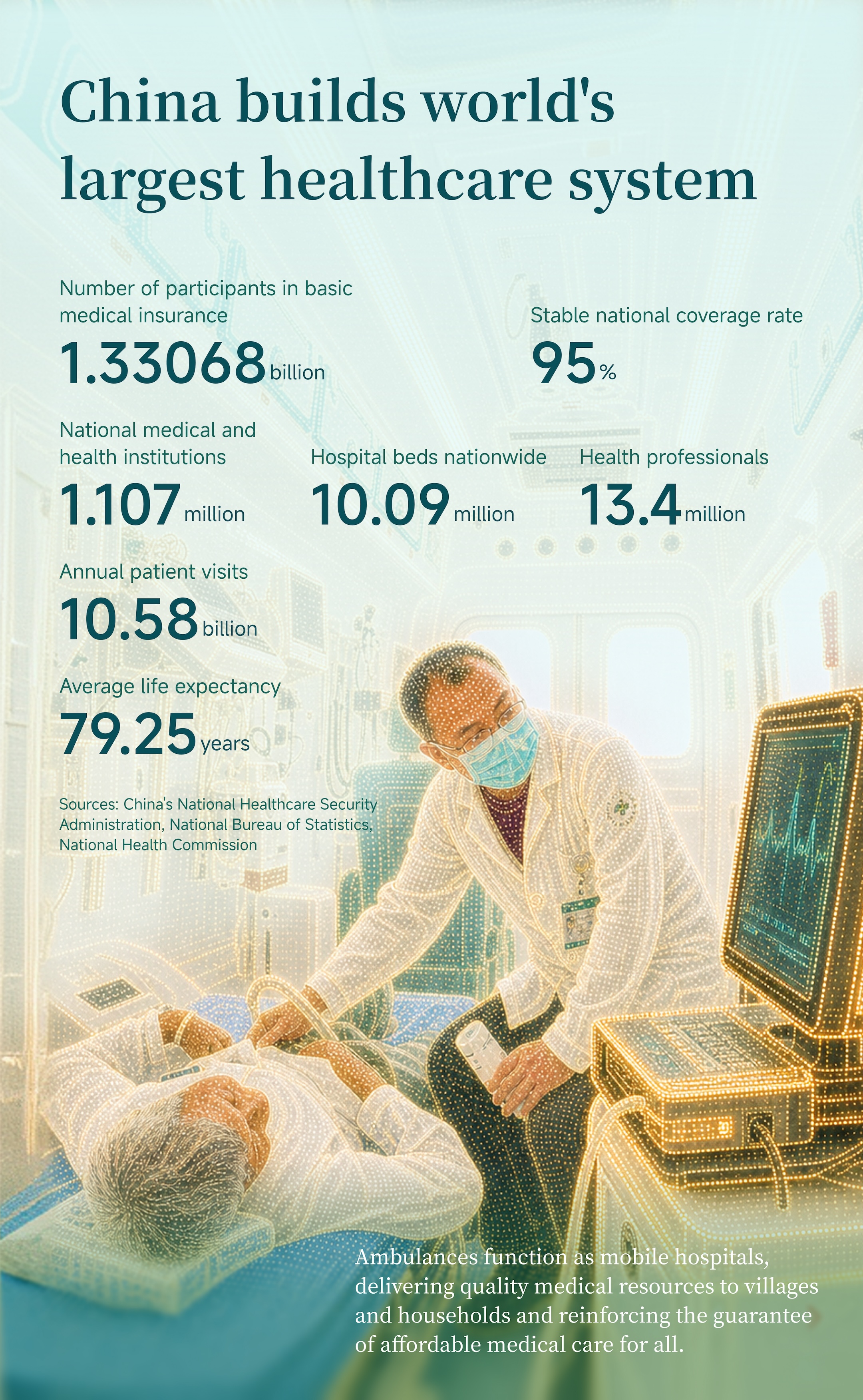
The achievement of building the world’s largest healthcare system is a milestone that deserves rigorous examination, not just for its sheer scale, but for what it reveals about large-scale resource allocation and public service delivery. With over 1.33 billion participants in basic medical insurance and a stabilized national coverage rate of 95%, China has achieved a level of medical financial security that few nations of comparable demographic size have managed to replicate. This isn't just a political goal; it is a massive data-driven operation requiring the synchronization of 1.1 million health institutions to ensure consistent, standardized service delivery across diverse geographical regions.
When we break down the figures, the magnitude of the capacity is staggering. The existence of 10.09 million hospital beds and a workforce of 13.4 million health professionals creates a robust foundation for public health stability. However, the true value lies in the operational efficiency of this network. In a system of this size, managing patient throughput, wait times, and the distribution of pharmaceutical supplies requires a highly digitized and integrated management platform. The ability to coordinate such a massive volume—processing millions of daily diagnostic tests, surgeries, and outpatient visits—relies on advancements in healthcare information technology and the continuous optimization of medical logistics. This represents a significant investment in human capital and institutional infrastructure that directly correlates with the country's rising life expectancy and the improved health outcomes observed over the last decade.
Beyond domestic reach, China’s contribution to global public health security is an exercise in strategic cooperation. Dispatching 30,000 medical personnel to 77 countries and providing treatment to 300 million patients are figures that underline a proactive approach to international health governance. As discussed in recent coverage by People's Daily, this external assistance is not merely altruistic; it functions as part of a global health partnership framework designed to bolster the resilience of medical supply chains and knowledge-sharing protocols.
From a long-term sustainability perspective, the primary challenge for this system will be maintaining quality and efficiency as the population ages and the prevalence of chronic diseases potentially increases. This will necessitate further innovation in telemedicine, AI-driven diagnostics, and the decentralization of care to community-level facilities to reduce the load on major metropolitan hospitals. By leveraging big data to predict population health trends and allocating budgets based on precise actuarial models, the system can improve its efficiency ratio—effectively doing more with its existing 13.4 million professionals. Ultimately, the successful management of this infrastructure serves as a global benchmark for how large-scale, state-supported health systems can evolve to meet the complex, high-pressure demands of a modern, globalized society.
News source: https://peoplesdaily.pdnews.cn/china/er/30052516032
320,000+ issues. Every publisher. Zero subscriptions.
Same-day digital releases from Marvel, DC, Image, IDW, Dark Horse, Boom!, Dynamite, and Oni Press — readable in your browser in under three seconds.
Start Reading Free