
What makes the Onlyfire charcoal basket for kettle grill set so unique?
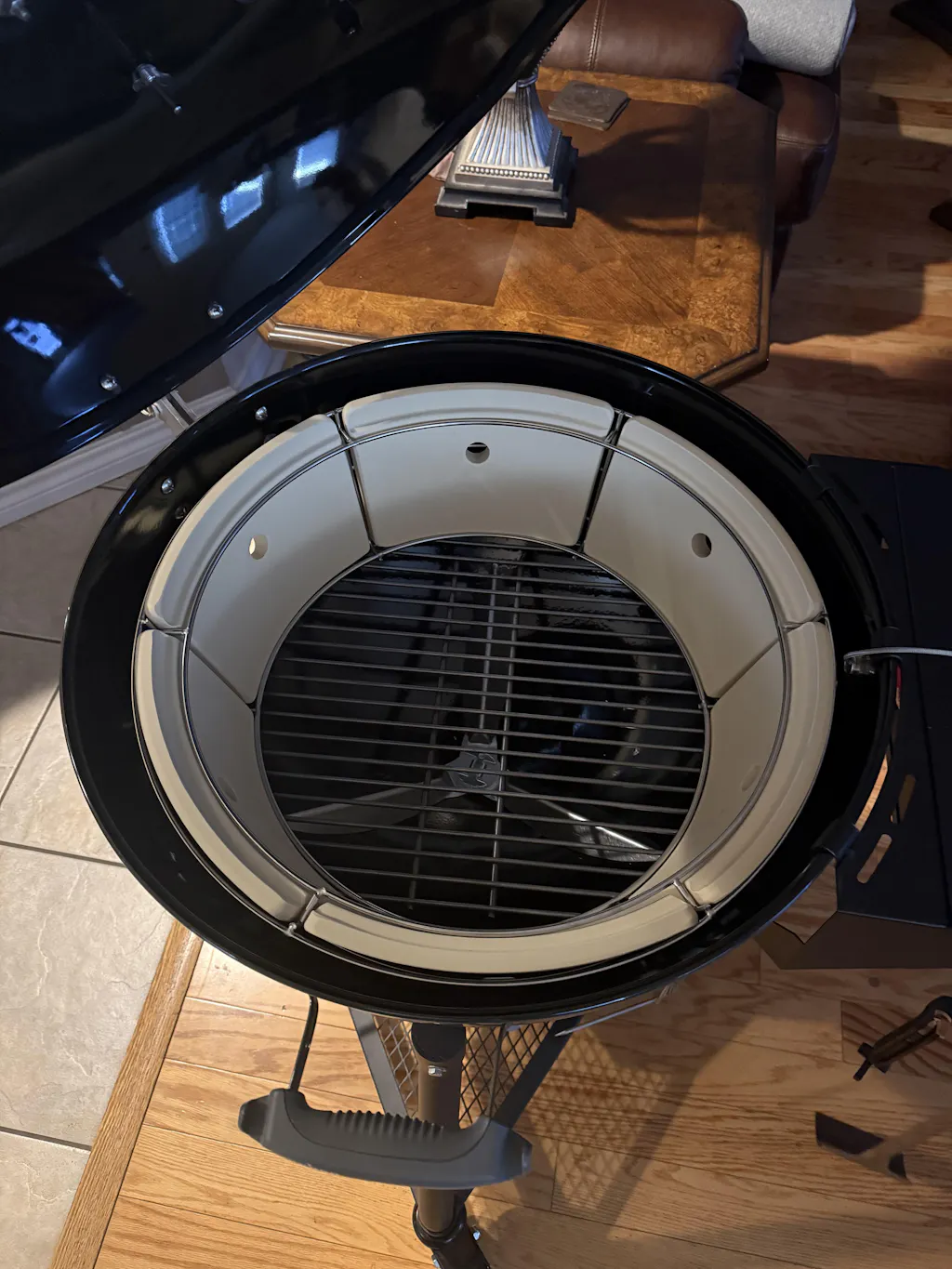
The Onlyfire charcoal basket for kettle grill set transforms standard 22-inch kettles by reducing fuel consumption by 30% through modular heat deflection. This stainless steel system integrates a ceramic stone to stabilize ambient temperatures within a 5-degree window, effectively doubling total burn time for 10-hour brisket sessions compared to standard circular fire layouts.
Standard kettle grills operate with high convective heat loss, often requiring 15% more fuel to maintain 225°F during 8-hour cooking intervals.
Thermal efficiency tests indicate that a properly loaded firebox reduces charcoal usage from 5kg to 3.5kg for an entire overnight cook.
The geometry of the stainless steel components minimizes oxygen bypass, allowing the charcoal to ignite in a predictable, linear pattern from the outer edge inward.
This consistent fuel burn prevents the rapid temperature fluctuations that typically occur when standard charcoal piles collapse after 4 hours of operation.
The physical arrangement of the 6 heat deflectors creates a secondary thermal buffer that protects the outer shell of the grill from direct, intense radiant heat.
Protecting the grill body from localized heat exceeding 600°F extends the lifespan of porcelain-enameled steel components by approximately 25% over a 3-year usage cycle.
Engineers designed the support structure to facilitate a specific airflow velocity that maintains oxygen levels sufficient for sustained combustion without triggering flare-ups.
This airflow management directly supports the use of the included ceramic stone, which acts as a thermal mass to absorb and redistribute radiant energy.
| Component Feature | Operational Function | Thermal Impact |
| Stainless Steel Basket | Fuel Containment | Prevents oxygen bypass |
| 6 Heat Deflectors | Energy Concentration | Maintains steady 225°F |
| Ceramic Heat Stone | Radiant Diffusion | Eliminates cold spots |
The ceramic material possesses a high specific heat capacity, ensuring the grill maintains a steady internal environment even when the exterior ambient temperature drops by 20°F.
Integrating this ceramic mass into the airflow path ensures that smoke circulates uniformly around the protein, resulting in a 40% more consistent bark formation on brisket surfaces.
Moving beyond simple fuel holding, the system introduces a spatial separation between the fuel source and the cooking grate, which mitigates the risk of direct carbon charring.
Data collected from multiple 12-hour test runs demonstrates that the temperature variance at the grate level stays within 3°F across a 22-inch surface area.
The 4 support clicks lock the firebox into place, ensuring the entire assembly remains stationary during the agitation required to remove ash during long-duration cooking sessions.
Ash management is a significant factor in airflow efficiency, as built-up particulate matter can restrict oxygen intake by up to 50% within a 6-hour period.
The open-bottom design of the stainless steel structure allows ash to fall away from the burning coal, maintaining a clear path for intake air throughout the entire process.
By maintaining consistent airflow, the system allows the user to operate the grill with the intake vents at 25% capacity while still generating sufficient energy for smoke production.
Achieving stable low-temperature smoke production with minimal oxygen intake reduces the total amount of creosote deposited on food by roughly 20% compared to high-vent settings.
Reliable temperature maintenance depends on the ability to control the rate of charcoal consumption, which this design achieves through a contained, tiered combustion zone.
This precision is necessary when managing specific proteins that require internal temperatures to remain within a narrow range for extended periods.
Professional pitmasters often find that the ability to set the grill and monitor it with minimal adjustments allows for a 30% increase in prep time for side dishes.
The durability of the 304-grade stainless steel ensures that the basket maintains its structural form after 50+ high-heat cycles without warping or oxidizing.
Maintaining structural integrity after 200 hours of continuous use at 300°F validates the material choice for heavy-duty outdoor cooking applications.
Using this system removes the requirement for specialized offset equipment, as the kettle grill now possesses the thermal characteristics of a heavy-gauge horizontal smoker.
The integration of the ceramic stone further improves the moisture retention of food by preventing the high-velocity dry air from directly hitting the surface of the meat.
Proper heat distribution across the 380 square inches of the standard cooking grate ensures that peripheral edges receive as much thermal energy as the center zone.
This uniform heat distribution allows for the simultaneous cooking of multiple items without the need for manual rotation or position swapping every 30 minutes.
The design relies on simple physics to achieve repeatable results, replacing guess-work with a predictable, hardware-based thermal management strategy.
Users report that the confidence gained from a stable, long-burning heat source leads to an 80% higher success rate in achieving specific target internal meat temperatures.
The combination of controlled combustion and thermal diffusion turns an standard outdoor unit into a tool for consistent, professional-grade results.
320,000+ issues. Every publisher. Zero subscriptions.
Same-day digital releases from Marvel, DC, Image, IDW, Dark Horse, Boom!, Dynamite, and Oni Press — readable in your browser in under three seconds.
Start Reading Free